|
1
|
|
|
2
|
|
|
3
|
- What is Customer Loyalty?
- Why should I care?
- How do I get it?
|
|
4
|
- Customers love your company and choose to associate themselves with it
- They tell others how good you are
|
|
5
|
- Its about the money…
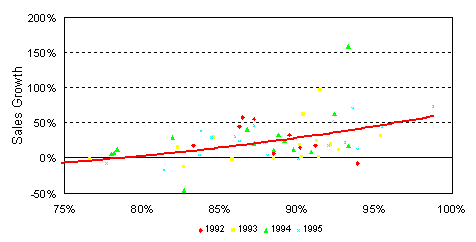
- Revenue growth and loyalty strongly correlate
- Acquisition of new customers costs a lot of money
|
|
6
|
|
|
7
|
- Acquiring a Customer, that is, Bid and Proposal costs, often range $300K
to $1M
- Divide B&P costs by Win Rate to get effective cost
- Hidden costs of establishing infrastructures and relationships
|
|
8
|
- Higher Award Fees
- Engineering Change Proposals
- Sole Source Follow-ons
- Task Orders
- GSA Orders
- Studies of next generation systems
|
|
9
|
- Distinguish between true loyalty and pretense
- Determine what’s important to the customer
- Assess how we are doing relative to the important items
- Find out who the customer thinks does it best
- Do it better
|
|
10
|
- Truly Loyal: Customers like your company and choose to associate
themselves with it.
- Accessible: Customers are willing to give you opportunities to earn
their loyalty.
- Trapped: Customers feel forced to do business with you now but will
leave if they can.
- High-Risk: Customers are dissatisfied and actively looking for
alternatives.
|
|
11
|
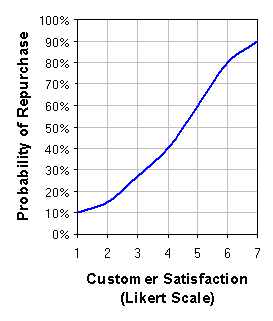
- Studies show that customers’ propensity to repurchase and reference are
related to their perception of a vendor’s quality
- Its customers, not our perception, of quality that counts
|
|
12
|
- External quality is about
variation around Customers’ expectations – Big Q
- Internal quality is about variation around specifications – Little q
- External quality comes first – internal quality closely follow and must
be tightly linked
|
|
13
|
- Customers form their opinion of us at moments of truth often in
impressionistic terms
- Moments of truth are times where
we “expose” our quality to customers
- External quality are both tangible and intangible attributes
|
|
14
|
- Customers form opinions when…
- Hear about us from another customer
- Receive our product
- Use our product
- Call for service
- Call for help
- Receive a bill
- Read about you in a trade journal
|
|
15
|
- Gather information from all customer touch points
- Analyze the total information
|
|
16
|
- Customers often buy similar stuff from several suppliers
- Customers’ yardstick for quality is relative to what prevails in the
marketplace
- So, we need to understand our competitors
|
|
17
|
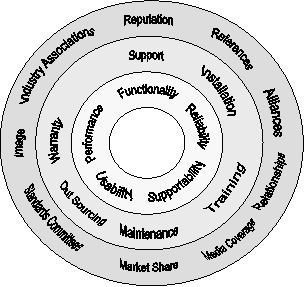
- Both tangible and intangible elements required by target customers to
solve his or her whole problem
- All products, services and relationships required by target customer to
fulfill their compelling reasons to buy
|
|
18
|
|
|
19
|
- Translate impressionistic information into quantitative information
- Monitor patterns related to time
- Look for special cause
|
|
20
|
- Actual data from a systems vendor
- Compiled from responses
|
|
21
|
- Most customers buy on value over some relevant range
- VALUE =
QUALITY ¸ PRICE
|
|
22
|
- Givens are as they should be – maintain them
- Look for those attributes that are important to Customers but the you
perform poorly – focus improvement here
- “Steal” resources to work on Opportunities from Overkills
|
|
23
|
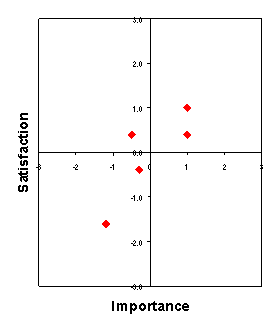
- Here the factors are aligned much as they should be
- “Ease to upgrade hardware” is in the Overkill quadrant, but no
“Opportunities”
|
|
24
|
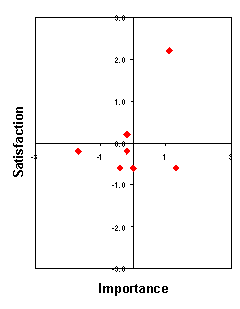
- Here the opportunity is “Service and Support Effectiveness”
|
|
25
|
- Table Stakes…
- ante to play the game
- silence if you have them
- dissatisfaction if you don’t
- unspoken
- Satisfiers…
- more are better
- satisfaction proportional to their presence
- spoken
- Delighters
- “wows” if you have them
- differentiators
- unspoken
- customers don’t know they need them
- key to loyalty
|
|
26
|
|
|
27
|
|
|
28
|
|
|
29
|
|
|
30
|
|
|
31
|
- The methods of choice are Regression Analysis together with the House of
Quality
- Regression analysis “connects” internal and external quality
- House of Quality methodically translates “Voice of Customer” perceived
quality to product and process specifications
|
|
32
|
- Used to progressively translate customer needs to requirements,
characteristics, and down to specifications at the process-element level
- Imparts traceablility between customer needs and specifications – useful
in diagnostics and change control
- Reveals the critical-to-quality requirements
- Points to what and where to measure
|
|
33
|
- Ultimately we need to describe the overall system with equation with
equations
- LOYALTY = ¦(x1, x2, …)
- Want to be able to predict loyalty from the things that we do everyday
|
|
34
|
- The House of Quality is a graphical tool that summarizes research data
- The House of Quality helps the project team look at a vast amount of
information and select the key measures to be used in the rest of the
project realization
|
|
35
|
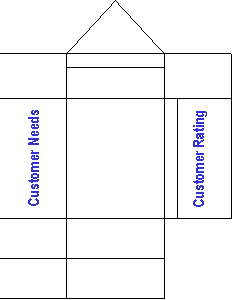
- House of Quality has seven rooms
- Just like rooms in a house, there are connections and relationships
among rooms
|
|
36
|
|
|
37
|
- Customers get what they need with consistently high quality and value
|

 Notes
Notes